Topic: Entertainment
Mike McCue, a serial web entrepreneur, compares his latest venture, Flipboard, to the 1957 Jaguar XKSS. Flipboard, a "social magazine" for the tablet, brings the best of print production values and sprinkles in social aspects in a web interface that is out to make a new premium web category. Mike describes his perspective, with online examples, of how art fits into his business model.
The Grateful Dead's legendary performances, and the grassroots tape-trading network that grew around them, multiplied the band's fan base and generated a distributed archive that sustains their worldwide musical and cultural legacy. Nicholas Meriwether is head deadhead of the Grateful Dead Archive at U.C. Santa Cruz. He is devoted to using Web 2.0 user experience theory and practice to organize accessible collections of those memories.
Dr. Moira Gunn goes on the set of the Oscar-nominated short film, The Fantastic Flying Books of Mr. Morris Lessmore with Co-Director Brandon Oldenburg and Executive Producer, Lampton Enochs.
"Right now we are in a shooting war between users and the analytics people, except the users aren't armed." Cory Doctorow argues that users and Internet companies are performing a transaction. A transaction where users give personal information in return for use of products or services. The transaction right now is lop-sided and unfair. To balance the transaction, Cory offers some suggestions.
Our long-term interaction with the web will be defined by six trends. These trends will will involve dramatic changes that will make computing more like what we are used to seeing in many of today's movies. Kevin Kelly explains why he believes that soon the internet will beneficially surround us in ways that most users don't imagine today.
How do you make things "go viral?" Jonah Peretti, founder and CEO of Buzzfeed, offers some tips on how to make media instantly popular by focusing on the use of social media as a tool for sharing content. Using his own viral content, from sweatshop Nike shoes to an automated date rejection phone number, Peretti explains how to make content go viral and a few uses for doing so.
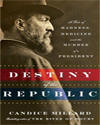
Dr. Moira Gunn learns new information about the life and death of the 20th U.S. President, James A Garfield, from Candice Millard, author of Destiny of the Republic: A Tale of Madness, Medicine and the Murder of a President.
The global television system is a half-trillion dollar business, leading Peter Chernin to say the cable business is "one of the great business models of all time." It is not surprising then that traditional television companies are nervous about new technologies, such as Netflix and Google TV, looking to secure content rights. Television companies must sharpen their game to maintain their 50 to 90 percent profit margins in the forthcoming digital age.
In a world of media fragmentation, how can a big telemedia company keep its edge? By bundling deals with content providers, aimed at targeted markets. Gerd Leonhard says "curation" is the name of the game. Previously, big broadcasters and communicationss companies were the only game in town. It's now time for a new telemedia to care about content, branding, and audience.
"Incumbents, Attackers, and Disruptors" are accelerating mobile Internet development. The ability to gain market share through innovation and motivating shoppers will sort winners from losers in the smartphone market, according to Mary Meeker. Currently, mobile Internet adoption is accelerating because of the demands of modern life, while angles such as flash sales and virtual goods are opportunities still not fully exploited.